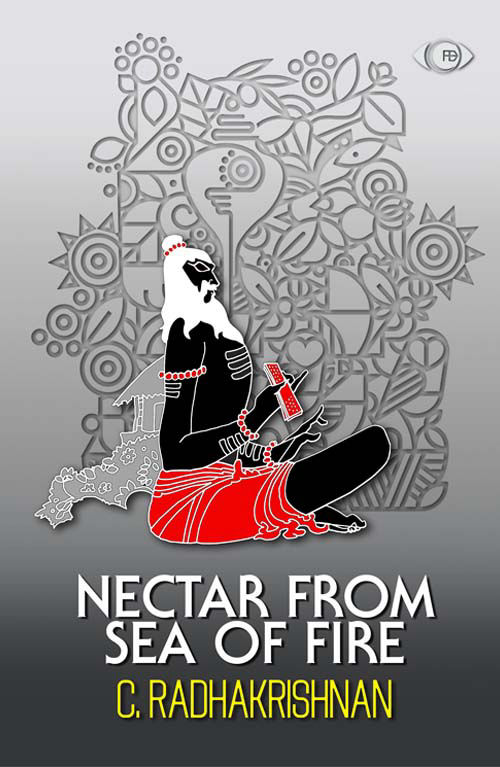
Works:

Novels-(malayalam)

  1. ellam maykkuna kadal

  2. puzha muthal puzha vare

  3. pullippulikalum vellinakshathrangalum

  4. spandhamapinikale nandi

  5. ivide ellavarkum sukham thanne

  6. verpadukalude viralpadugal

  7. Munpe parakkuna pakshikal

  8. karal pilarum kalam

  9. iniyoru nirakanchiri

  10. ullil ullathu

  11. veshangal

  12. kalippattangal

  13. kaivazhikal

  14. verukal padarunna vazhikal

  15. moonu novalettukal

  16. aasha eka swapnaparambara

  17. agni

  18. oodum pavum

  19. kangalikal

  20. pin nilavu

  21. thaiveru

  22. mrinalam

  23. tharanisha

  24. thevidissi

  25. nilavu

  26. brihatharanyakam

  27. maranashiksha

  28. poojyam

  29. ulppirivukal

  30. yudham

  31. kannimangakal

  32. kurekkoodi madangivarathavar

  33. Ottayadippathakal

  34. Kanalthullikal

  35. Ival avaril oruval

  36. amritham

  37. nizhalppadukal

  38. marichika

  39. theekadal kadanhu thirumadhuram

  40. kalikalavasthakal

Collections of short stories -

  1. therenjedutha cherukathakal

  2. Avilpothi

  3. kudiyozhikkal

  4. aakashathil oru vidavu

  5. ghoshayathra

  6. karadi

  7. unarum vare

  8. thachanar

Dramas -

  1. Dweepu

  2. valiya lokangal

  3. nayattu

  4. ithikkannikal

Poems -

  1. ottayan alarunnu

  2. sudarshanam

Essays -

  1. Aalochana

  2. Bhadrathayude Samathalangalil

Translations -

  1. Thakshakan muthal (poem)

  2. Bahirakashathilekku(science)

  3. Mol Flanters(novel)

Work in English -

STUFF AND STYLE OF THE UNIVERSE

Works translated to English -

  1. ZERO, Arnold-Heinemann.

  2. MAYBE ANOTHER DAY, National Academy of Letters of India.

  3. PATCHES OF SHADE, Kerala Sahitya Academy.

Works translated to French -

  1. FRAGMENTS D'OMBRE, Roman Kailash.


Click here to see more details of C Radhakrishnan's books


C. Radhakrishnan has been honored by both the National Sahitya Akademi of India (Award of the National Akademi of letters, 1989, for Spandamapinikale nandi) and the Sahitya Akademi of Kerala (Award of the Kerala State Akademi of letters 1962, for Nizhalpadukal). He has been conferred the Vayalar Award (1990, for Munpe parakuna pakshikal), Odakuzhal Award (2006, for Theekadal Kadanhu Thirumadhuram), Mooloor Award, Mahakavi G. Award (1993, for Verpadukalude viralpadukal),  Dr. C. P. Menon Award (for Aalochana), Achuthamenon Award (for Munpe parakuna pakshikal), Abudhabi Malayali Samajam Award (1988, for Munpe parakuna pakshikal), Pandit Karuppan Award, Devi Prasadam Award, Uroob Award (2007), Lalithambika Award (2004, for his total contribution to Malayalam literature), Muttath Varkkey Award, Padmaprabha Award (2007, for total contribution to Malayalam literature, with special mention to Theekadal Kadanhu Thirumadhuram) etc. His works have been translated into various Indian and foreign languages.

Two of his feature films form part of the official Indian Panorama of motion pictures.


Friends From Far Away

Akalangalile Kuttukar

A novel for children which was serialized in Balabhumi.

A  powerful and friendly entity from far out in the cosmos makes contact with two children, to save them, and destroy an ancient, evil being. But as the children are dragged deeper and deeper into an intricate and timeless conflict between good and evil according to the Universal Design,... they find to their horror that not only their very existence is at stake, but of everyone whom they love...and maybe, even worse....

...will they, with their good friend, be able to defeat this age-old foe?


The Author plans to do a comprehensive work on eastern philosophy - about Vedantha.

Presently he is working on the new edition of Stuff and Style of the Universe - essays on Physics which attempts to answer the enigmas in Physics on a simpler footing.

Currently he stays at his peaceful native village, Chamravattom, with his wife Vatsala.


Address -

C. Radhakrishnan, Chamravattom, Tirur 676110, Kerala state, India

The author can be contacted through hi_techbooks@yahoo.co.in


With his grandson Harigovind


To Stuff and style of the universe The entire work published in the web. *Updated March 2007

Some of the key stanzas in the Bhagavad Gita about the stuff of the universe.

The fundamentals of Advaitha philosophy and its practical outlook is explained here

Click here to see more details of C Radhakrishnan's books

Political history of Malabar given in chronological order

Information about Ezhuthachan from Ulloor's works

Prof. K. P. Narayana Pisharodi's work Thunjath Acharyan

Granthakshara, Vattezhuthu, Kolezhuthu, Malayanma, Devanagiri and Tamil alphabets

About Ezhuthachan's caste - an article with some evidences


Adhyathmaramayanam Kilippattu grandham

Prepared and perfected by examining various texts of Adhyathmaramayanam kilippattu,  by Prof. K. P. Narayana Pisharody.


Page compiled by Hi-Tech Books, Kochi 682017 India

hi_techbooks@yahoo.co.in


Welcome to the home page of

C. Radhakrishnan


This page contains information about C. Radhakrishnan, the Malayalam (South Indian) writer.


When are we going to join them with eagerness and joy?

Without subjugating anybody even when strong, without hating anybody even when weak;

those who had shown the way and flown in front even long long before to the valleys of peace and tranquility,

they still ask us with compassion,

when will you be joining us?....

when?....

how many blood baths more?....

                                          - From Munpe parakkuna pakshikal


Chakkupurayil Radhakrishnan.

Born 1939 February 15. Eldest son of Parappur Madathil Madhavan Nair and Chakkupurayil Janaki Amma.

Completed his education  at Guruvayoorappan College (Kozhikkode) and Palakkad Victoria College (Post-graduation in Physics).

1960-62 - Scientific assistant at the Astrophysical Observatory at Kodaikanal.

1962-64 - Officer-in-charge  of the World Wide Seismological System, Pune station.

1964-68 - Member, Editorial board, Science Today, Times of India, Bombay.

1968-72 - Assistant editor, Link and Patriot, Delhi.

1980-82 - Editor, Veekshanam Daily, Kochi.

1995-97 - Editor-in-charge, Bhashaposhini and Year Books, Malayala Manorama, Kottayam.

1997-99 - Consultant editor, Madhyamam Daily, Kozhikkode.

Two-time member of Indian National Film Award Committee.

Two-time member of Indian Panorama Film Screening Committee.

Member of Kerala Film Development Corporation Director Board for one term.

Captain of the group of writers who traveled on foot from Kasargod to Trivandrum to spread the message of peace, in 1984.

'Hiroshima-Nagasaki Fast' - Took a fast for three days along with various social workers for world peace, in 1985.

Chairman of SPCS for one term, and member of the board for two terms.

State Chairman of Yuvakalasahithi for one term.


The Author's essays on Physics -

STUFF AND STYLE OF THE UNIVERSE

Presently the editing and updating work is going on for the next edition. The new edition promises to be simpler, yet incorporates the latest concepts in physics and chemistry.

This is a different look at the universe. A somewhat unconventional look....

Physics is clean, trim, open and transparent and it amply satisfies reason, at least to begin with. Ask a tricky question and get a happy answer that leads to a trickier question, a happier answer and so on. The hitch is that the process thus merrily begun often fails to reach a joyous end..

To Stuff and style of the universe The entire work published in the web. *Updated March 2007

Some of the key stanzas in the Bhagavad Gita about the stuff of the universe.

The fundamentals of Advaitha philosophy and its practical outlook is explained here


Titles given in Malayalam language:

Theekadal Kadanhu Thirumadhuram

Second Edition

Biography of Thunjath Ezhuthachan, the renowned poet.

In the second edition, the text has been meticulously revised and edited.

C. Radhakrishnan has been conferred the prestigious Odakuzhal Award for this brilliant work.

Click here to view some of the responses to the first edition.

The novel was serialized every Sunday in the Mathrubhumi newspaper from October 2003 to October 2004.

The work presents an extremely challenging attempt to sketch Ezhuthachan's life and his creative instinct through the great teacher's own mind and emotions. The story is written mostly as the Author had heard from his grandparents in correlation with the known history of that period.

In the novel Ezhuthachan's time has been fixed to approx. 1475 to 1550 A.D. because the events in the original story bears maximum correlation with this time period; the language, style and words used by Thunjath Ezhuthachan correspond to this time period; and Ulloor and many great language scholars have put Ezhuthachan's time period to be this.

Thunjath Ezhuthachan - the greatest "orchestrator" of Malayalam:

Why is Ezhuthachan considered the father of Malayalam language?

Because there may have been many keerthanas or namam or japam, but is was impossible to find a single house in Kerala without a copy of his Adhyathmaramayanam during the dark times of war, disease and famine. There is no doubt about his contribution to the literary level of the common man. The great teacher taught the people to respect and worship the language and the alphabet, a level of culture which is difficult to find even in the modern era. He refined the Malayalam language style and wrote his works for ordinary people, incorporating whatever is good with a strong sense of righteousness and worship. Ezhuthachan's style came to dominate Malayalam not only by the popularity that his works enjoyed. His contribution to the language through the Adhyatmaramayanam and SriMahabharatham is unparalleled, and his contribution in the cultural level is immense. There may have been scholars and poets before or after him, but there is plainly no scope for controversy in this matter.

About the alphabet system in Kerala:

Just before Ezhuthachan’s time, the following was the situation in Kerala.

1. The 30 letter Vattezhuthu was taught as the Malayalam alphabet by the various Kalaries or schools to the common people.

2. Alphabets which are equivalent to those in Sanskrit (Granthakshara) were learned by scholars and those interested in Sanskrit works.

3. As the influence of Sanskrit in Malayalam increased, Vattezhuthu was used commonly to write Sanskrit words and other derivations, though distorted. The names of parts of Vedas like samhita, ashtakam, varggam, anuvakom were written as changatha, attam, vakkom, anam respectively, in Vattezhuthu. What was written, was not exactly what was read. Works may also have been written in this way.

4. Vattezhuthu was used with interposition of letters of the Granthakshara to denote essential Sanskrit phonetics. (Eg. - In important Decrees or Shasanas.)

5. Works needing essential Sanskrit phonetics written using Grantha, remained inaccessible to the common man who, at the most, knew only Vattezhuthu.

It is easy to visualize the glaring inadequacies.

What Ezhuthachan did -

To establish an alphabet system which is equivalent to Sanskrit, instead of the 30 letter script of Malayalam (Vattezhuthu), Ezhuthachan took the best from the existing sets with Granthakshara as the base, and modified them. Common derivations were formed. Ezhuthachan must have thought it auspicious and total for the alphabet set to have 51 characters (See Harinamakeerthanam). "Hari Sree Ganapathaye Namah" is also 51 according to the system of counting with alphabets. This method of initiating children to the alphabets was also begun by Ezhuthachan according to Prof. K. P. Narayana Pisharody. The new alphabet set had Ra and zha as parishishtam. (Malayalam does not have words which begin with these characters, but these alphabets are essential in the language.) It was not sufficient to form just an alphabet set, as it will not be accepted in all places easily. Most probably there were different views at that time. The most practical way out was to establish the set by a Keerthanam, so that it will be standardized everywhere.

(However Vattezhuthu continued to be taught in various places as the Malayalam alphabet till the British regulations relating to registration of bonds and deeds eventually led to its disappearance.)

It was in Thunjan Parambu that Ezhuthachan modified the Malayalam alphabets and wrote the Harinamakeerthanam to popularize them. Even after centuries people from various parts of the state come to take sand from Thunjan Parambu to initiate their children to the alphabet. Every year, hundreds of people bring their children to write their first alphabets during the Vijayadasami festival, to Thunjan Parambu.

"Anpathoraksharavum oronnithenmozhiyil

Anpodu cherkka Hari Narayanaya Nama"

             - Harinamakeerthanam 14th stanza

There is no controversy that the great teacher was the strongest sponsor of the 51 letter alphabet for Malayalam instead of the 30 letter Vattezhuthu.

Click here to view Granthakshara, Vattezhuthu, Kolezhuthu, Malayanma, Devanagiri and Tamil alphabets

Click here to read information from Prof. K. P. Narayana Pisharodi's work Thunjath Acharyan (The great Sanskrit scholar has written in detail about Ezhuthachan's contribution to the Malayalam alphabet system. Some of the information is provided here.)

Click here to read information about Ezhuthachan from Ulloor's Kerala Sahitya Charithram Vol 2. (First published as early as in the 1950s.)

Click here to view some of the responses to the first edition of theekadal kadanhu thirumadhuram.


With family


The two grandchildren, photo taken on Feb 20th 2007


Free Cell Phone
Best Cell Phone Deals